Developing Customer Personas and Segmentation

About Course
This course provides a comprehensive framework for creating accurate customer personas and applying effective market segmentation strategies. Learners will discover how to collect and analyse customer data, develop realistic personas, and segment their audience to enhance marketing precision and impact.
Descriptive Points
- Understand the theory and application of segmentation
- gather and interpret behavioural and demographic data
- construct detailed customer personas
- apply these to tailor marketing strategies and messages.
Course Content
Marketing Planning
-
Developing Customer Personas and Segmentation
08:30 -
Quiz
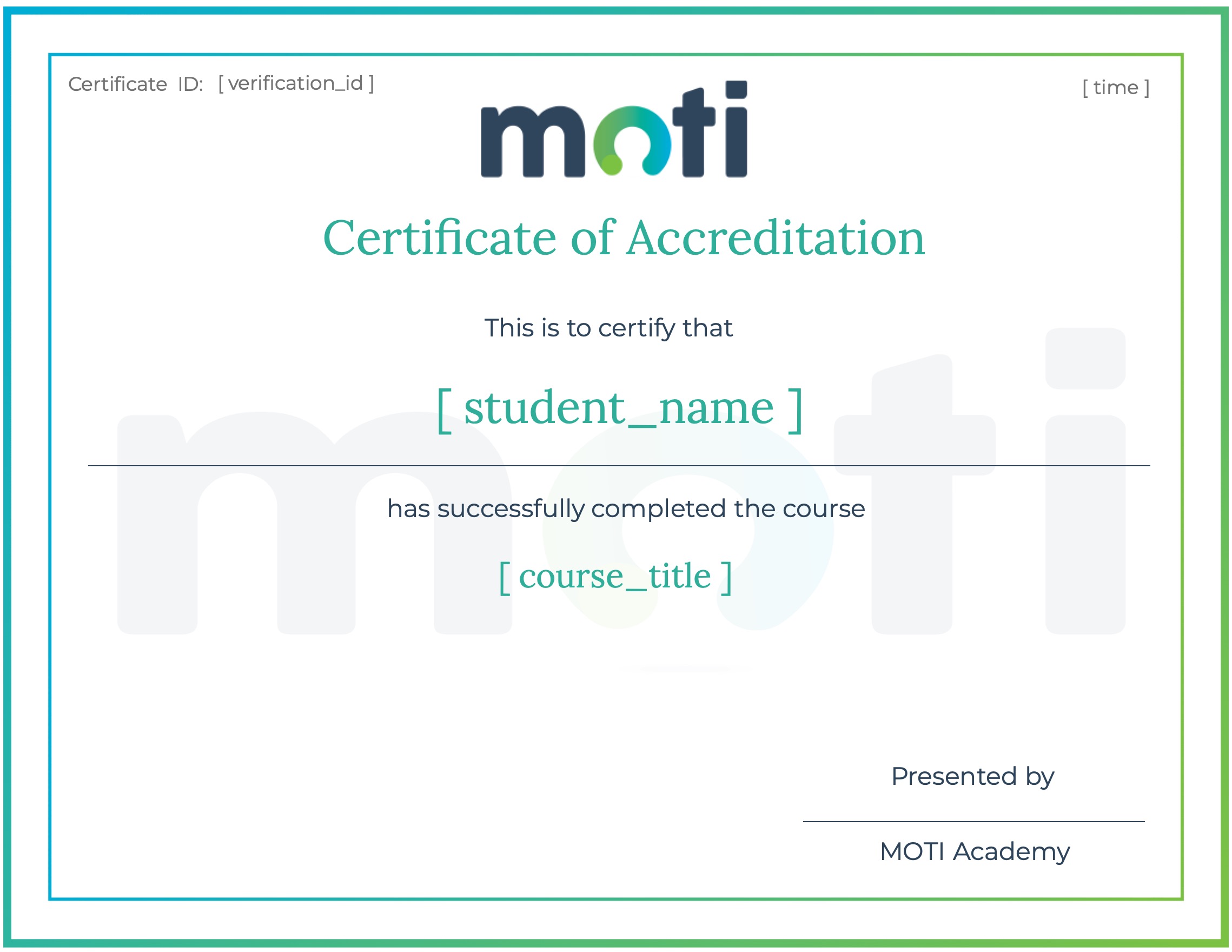
Earn a certificate
Add this certificate to your resume to demonstrate your skills & increase your chances of getting noticed.
Student Ratings & Reviews

Related Courses
Market Research and Competitive Analysis
- Learn the fundamentals of market research
- explore qualitative and quantitative techniques
- master the interpretation of industry trends
- gain expertise in competitive benchmarking and SWOT analysis.
Budgeting, Execution, and Measuring Success
- Learn how to create a practical marketing budget.
- Understand how to allocate resources across channels and tactics.
- Explore project management techniques for campaign execution.
- Discover key metrics for tracking success.
- Learn to refine strategies based on performance data.
Choosing the Right Marketing Channels and Tactics
- Understand the range of marketing channels available.
- Learn to evaluate which channels fit your target audience and goals.
- Explore how to integrate online and offline tactics.
- Discover cost-effective ways to maximise reach and engagement.
- Avoid common pitfalls in channel selection and campaign execution.

Understanding Your Market and Target Audience
- Understand what market research involves and why it matters.
- Learn to segment audiences based on demographics, behaviours, and needs.
- Explore methods for gathering and interpreting customer data.
- Identify market opportunities and competitive positioning.
- Use audience insights to create targeted marketing campaigns.
- Understand the SMART framework in a marketing context.
- Learn how to link goals to overall business objectives.
- Explore practical examples of SMART goals in different industries.
- Identify and avoid common mistakes when setting goals.
- Discover tools and methods to monitor progress.
What is a Marketing Plan and Why it Matters
- Offers a definition and explains the purpose of a marketing plan.
- Takes you through the key components that make a marketing plan effective.
- Offers real-world examples of successful marketing plans.
- Explains how marketing plans connect with broader business strategies.
- Surveys common pitfalls in marketing planning and how to avoid them.
Scaling Marketing Operations and Forecasting
- Learn to streamline marketing workflows
- Learn to implement scalable systems
- Get to integrate automation
- Develop forecasting models
- Align resources with projected growth.

Marketing ROI and Attribution Models
- Learn to evaluate marketing performance
- Know how to apply multi-touch attribution models
- Learn how to calculate ROI for campaigns
- Get to interpret data to reallocate budgets
- Learn how to integrate performance metrics into strategic planning.
Multi-Channel Marketing Integration
- Learn to plan integrated campaigns
- Learn how to align content across platforms
- Learn how to manage cross-channel synergies, track customer journeys, and refine strategies using multi-channel analytics.
Customer Behaviour Analytics and Targeting
- Learn to collect and interpret behavioural data
- apply predictive analytics
- segment audiences with precision
- design targeted campaigns
- measure the effectiveness of behavioural strategies.
Strategic Marketing Planning and Positioning
- Conduct comprehensive situational analysis
- set aligned marketing objectives
- define sustainable competitive advantages
- select profitable target markets
- develop positioning strategies and integrate them into the marketing mix.